Organic Gardening

Manure Depot
Embracing Our Interdependence With Nature
Apr
13

Education: Planting The Summer Garden In Florida

Posted by Adina


South Florida Summer Garden

A South Florida Summer Garden


Slow Food Gold and Treasure Coast is offering a series of garden classes. On Sunday April 28th at 1pm to 3pm I will be presenting Planting The Summer Garden In Florida. This class will be held at Heathcote Botanical Gardens in the old house at the back of the property. It is a good idea to pre-register with Slow Food Gold and Treasure Coast.

I will be discussing the summer garden choices for Florida gardeners. Whether you chose to go fallow, plant nutrient building cover and mulch crops, or plan to grow edible crops, or some of each choice we will be discussing how that is done and which crops are appropriate for the summer season in Florida growing zones 9 and 10.


Mar
01

In The Garden: Fall & Winter 2012 and 2013

Posted by Adina
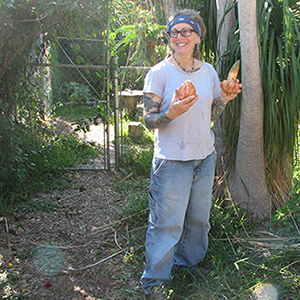
Cecil, Renee, and Seminole Pumpkin

Cecil and Renee and Seminole Pumpkin


This fall and winter there is a great deal to see and to eat in my South Florida Garden.

I have gained a little extra time this year to spend at the homestead garden and I can see how that is paying off.

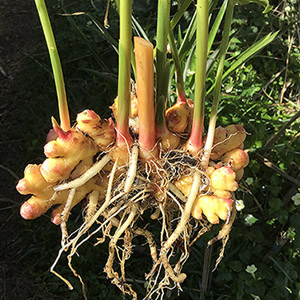
I have been harvesting turmeric and ginger that grew all summer in my garden. I am planning to grow much more next

summer.

Turmeric Harvest

Three Turmeric Plants

Turmeric Drying

Turmeric, washed and drying.


My pigeon pea plants are full of flowers and peas, and the black seed variety that I got from my Melbourne forest farmer buddy

John Rogers is huge and loaded, and it barely quit fruiting from the summer before it began again in the fall. It is a more cold

tolerant variety of pigeon pea than the beige seed variety, so I don’t worry about it a bit when the temperatures drop. It has

been warm enough this winter that I have also been getting a decent harvest from the beige seeded variety of pigeon pea, and

that is my favorite type to eat.

Pigeon Pea Plant

Flowering Fruiting Pigeon Pea Plant


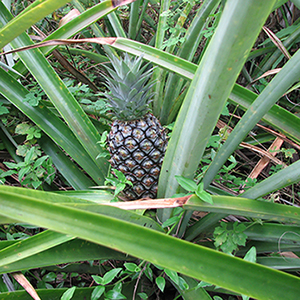
I had a strange winter pineapple, full sized and still green, hidden in the back of a mass of pineapple plants, all of which fruited

properly in the summer except that one. The last three pineapples I harvested from a different area were quite late and though

they had excellent pineapple flavor they were not very sweet. I didn’t get to taste this late fruit as it disappeared before it began

to ripen. I am guessing one of the creatures of the woods got it. It is March now and I have many pineapples that have begun

flowering as well as an early bloomer that is nearly full sized already.


When Hurricane Sandy sent tropical storm force winds ashore while passing by Florida, the shady hedge plants on the south

side of my property came down. We cut it all up, putting the logs aside, moved a compost heap that was suddenly in full sun,

and made a new garden with the logs and a pile of broke down manure. That garden is soaking up the best sun on the property,

and producing well.

The New Garden

This garden went in when a 15 foot tall hedge came down.


One of my annual garden areas is succumbing to a managed succession to perennial food crops. That is, it is getting less sun

than the winter before, so the annuals there are having a slow start this season and will be producing later than other areas of

the property. In that garden I had a good seminole pumpkin crop over the summer culminating in a hidden pumpkin’s suddenly

becoming visible hanging in the loquat tree. It weighed in at seventeen and a half pounds. The first one I plucked from that tree

was big at eleven and a half pounds. The vines from that pumpkin plant are still alive and traveling around the garden. If the

winter remains mild I expect that same plant will continue its roam around the garden next summer too. If not, I have more

seeds. I really enjoy the hidden fruits and the surprise fallen fruits that suddenly become visible. It is interesting to note that the

fallen pumpkins I have found on the ground so far even though they have shown signs of having been on the ground for long

enough to have rotted were not decomposing. I have even picked up pumpkins that were a quarter buried in the ground where

they fell and earthworms were busy in the soil beneath, but the skin of the pumpkin remained intact.


The banana plants that are growing in the chicken litter are humongous. The flowers I have been waiting for have

emerged, and I can count 6 hands so far. This year I won’t be climbing for bananas, they have grown too tall. I will have to pull

the plant down to get the fruit. Passion vines are still producing in that area, but as I have done all summer long, I am sharing

with squirrels. The carambola tree is loaded with fruit and we have had the pleasure of eating star fruit every day. The papaya

has lots of fruit on and I am hoping for ripe fruit, squirrels willing.

17 and a half pound Seminole Pumpkin

Seminole Pumpkin


The loquat tree had lots of fruit, but it wasn’t very good this year. Below it a new rose apple is growing well.

Below the rose apple I have collard greens, lambs ear and vanilla grass and now summer crisp lettuce seedlings. My other new

fruit trees white sapote, olive, almond, and lychee are doing well so far. If they are as well in the spring it will be a great summer

for them.


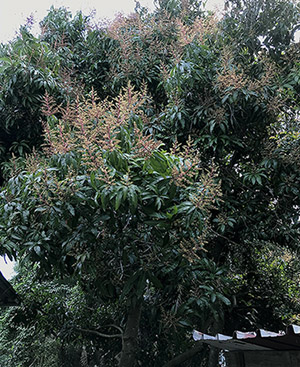
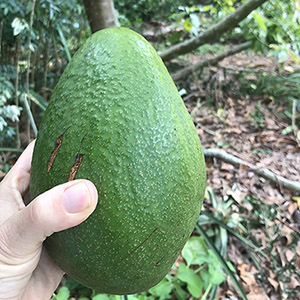
The mango tree, and the Choquette avocado tree (It makes football sized avocados.) are in full bloom madness.


At the shed area I am still battling with running bamboo. Some friends helped me dismantle a hugel mound and we began to

dig out the bamboo that had invaded it. I reassembled the hugel mound and planted fingerling potatoes in it. Nearby, where

Rattlesnake beans grew this summer I have sugar snap peas up and running, with stinging nettles and some kale, lettuce,

broccoli and parsley transplants there as well. A volunteer rattlesnake bean has joined the climbing mass of peas and I am

harvesting those sweet purple spotted green beans along with the peas.


Near the pea garden I planted a mound in clover and tomatoes. Papaya volunteers came up there too. Now I have papaya plants

with tomato plants and a clover understory that is keeping the soil covered below. It is such a cool garden, and even though it is

mounded nearly two feet up from ground level it rarely needs water.


The shed garden vege patch is doing real well. I have had to disassemble it every summer to remove the bamboo that runs into

it. This summer was no exception, and I have already clipped bamboo shoots this fall, so I know what I will be doing again

next summer.


East of the shed garden vege patch I put in wheat and a good bit of sweet white clover. A gopher tortoise ate down my entire

first and second wheat crops. I have since covered that area over and planted corn and more clover, and yeah I will go ahead

and fence in the corn against the tortoise. I was surprised to discover that the tortoise does not seem to be the least bit interested

in the clover.


I ran out of space for the transplants I was thinning from the gardens I seeded. In desperation I moved cabbages and

broccoli to the mulch around young fruit trees. I have found that a handful of rotting manure encourages their development in

the fruit tree mulch. It is a good practice for me to move annuals out into beds with perennials. I often miss obvious spaces for

transplants because I was, until recently, unaccustomed to mixing annuals with perennials.

Radishes

Radishes


I have been harvesting salad greens and radishes for months now. I have just begun to harvest cooking greens and

now the broccoli is flowering.  A broccoli plant that limped through the summer when all the others were dead became vibrant

in October and was providing me with lovely side shoots before the new broccoli crop had gotten up six inches. I am allowing it

to go to flower now and have been collecting mature seed pods from it for next fall’s planting season. While the broccoli plants

have been large and vigorous this year the florets even the first center florets have been small. Since this is happening in all of

my gardens, and I have heard the same from some of my friends, I wonder if it is because of the record warm temperatures we

have experienced this winter. I am making an effort to harvest carrots following our cold snaps. I think that gives the best

chance for sweet carrots in a rather warm growing season. They taste good so far, but not as delicious as the nearly translucent

super sweet carrots I harvested after 2 straight weeks of mostly freezing night time temperatures we experienced a few years ago.


We have been eating lots of Lima beans and there are still lots of beans on the vines. I am surprised to see that the lima plants

do not seem to mind the few cold nights that we have had so far.

King Of The Garden Lima Beans

Lima Beans


Certified Tree Service came out during the summer and thinned the vines in the woods on the east and south of the circle

garden. It was amazing how the air came through after they were done. The garden is getting better sun too and is growing very

well.  There is some of everything in the circle garden including a non-native (not fuzzy) chickweed that I am hoping will

become native to my garden. It is very delicious, and grows just as vigorously as the native chick weed does.

The Circle Garden

Our Oldest Garden Turned 20 This Fall

Circle Garden

Circle Garden


This is how it goes in the natural garden where most of my time is spent planting and harvesting and none of my time is spent

battling with insects, or throwing fertilizers. You can do this too.


Tags: , , , , , , , ,

Jan
04

In The Garden: More About Sweet Potatoes

Posted by Adina

I believe this the the third article I have written about sweet potatoes. It may seem ill timed as sweet potatoes are summer crops, but I hope readers will find value in this post at this time. Click the links below to read the sweet potato articles written here in the past. In The Garden: Growing Sweet Potatoes
In The Garden: Revisiting Sweet Potatoes

Most of us have been harvesting our summer sweet potatoes since November. Here in South Florida sweet potatoes function like perennial plants. While a frost and freeze will damage sweet potato vines our soil doesn’t freeze. The parts below ground do fine all winter long so that once you have sweet potatoes you will always have them. It is only necessary to create your slips once. After that there should always be sweet potato vines somewhere in the garden from which to take new cuttings. I have even discovered that discarded vines can not be trusted to die and decompose, rather, they grow where ever they are thrown down.

If  you are a no till gardener like I am you understand when I say it gives me pain to dig up sweet potatoes, so when I harvest them from my winter garden I take the vines out as well as potatoes that are obvious from the surface. I don’t turn up all of the soil where the potatoes grew, and that has worked well for me. Then in the spring, as my winter crops are finishing, the parts that were left below sprout again just in time to cover the soil for the summer.

This year I have kale and cabbage transplants growing in the bed from which I took the sweet potatoes. While we had some very cold weather in October, we have otherwise had a mild/warm winter (It is the beginning of January now, so we may yet have cold weather.). Usually sweet potatoes will lie dormant below my winter garden only surging in the spring as the temperatures rise. Not so this year, even as the cabbages and kale are taking hold I am finding sweet potato sprouts coming up through the mulch between them.

I have been able to push my fingers into the soil around the potato sprouts, and slide long slim potatoes out of the ground without disturbing the young transplants on the surface. I have, so far in this way, harvested many lovely sweet potatoes from the garden this winter. In one case, as I began to push my fingers in to grasp the potato below, a very large earthworm ejected itself from the soil. I have to admit I was startled. It was a very big earthworm, night crawler size, and it actually launched itself out of the ground, and then quickly found its way back down into the soil where it landed, which brings me to another point about sweet potatoes.

Sweet potatoes are good for the soil. All summer long their vines and heart shaped leaves keep the soil covered. The mulch below the vines breaks down in cool comfort. The swelling potatoes gently move the soil repairing any compaction issues that existed before them. I find the soil below the potato vines to be black, well aggregated (lumpy) and loaded with worm castings. The weeds that are coming up around my transplants are easy to slip out of the soil where the potatoes were. The new crops are growing as if all of their soil needs are being met, and the soil is holding moisture much longer than the native soil.

Knowing what I know now about sweet potatoes preference for sandy drier soils I have often said I would not again put sweet potatoes in my better soils, but every spring like clock work the sweet potatoes re-sprout in this garden section where I originally put them, and I find that I like the effect they have there as much as I enjoy the food they produce.

Finally, South Floridians, put your sweet potatoes in the refrigerator. The cool temperatures increase the sweetness of your crops, and will inhibit sprouting.

Tags: , , , , , , ,

Nov
01

In The Garden: Growing Lima Beans

Posted by Adina

A few years ago I began growing Lima Beans (Phaseolus lunatus) in the garden when I scored some Violet’s Multicolored lima beans at a seed swap. Lima beans will grow well in the hottest weather we have here in South Florida, and when they begin to yield, they will supply lots of very nice buttery lima beans, and they will thrive until the weather turns cold. The variety I most enjoy eating is the King of The Garden. It is a pole bean variety. It is an open pollinated heirloom so I can save seeds for my next crop, and the white beans are huge. I am careful not to grow any other Lima bean varieties at the same time so that when I save the seeds I am not accidentally making hybrid varieties.

There are bush and pole varieties of lima beans. The pole varieties will go as high as there is support for them, and then they will lean over to whatever is nearby and grow to that. Be aware that however tall the support structure is for the pole bean, that is how high you will be reaching for your harvest. Also the plant will grow back and forth along the top of your support creating lots of weight up there. That can be disastrous for beans growing on a weak support on a windy day. I use bamboo poles and I have had to tie the bamboo to a support post to keep it upright.

I really like lima beans because they are very hardy plants, and the beans are cased in a very thick walled pod that protects the beans from everything. The pod will develop into a large size before the bean puts on any size, so it is a good idea to feel the bean before pulling it from the plant. If you are not certain, you can see through the pod by holding it up to the light until you become accustomed to the feel of a full size lima bean.

I have discovered that lima beans are day length sensitive, so the plants I started in June, and the plants I started in August are both producing pods at the same time, so while Lima bean plants are glad to survive through the long summer days, they won’t feed you until the days are shorter. It is October, still hot and the lima pods are filling up quickly now.

Lima beans can be cooked and eaten while they are fresh, or they can be dried for later use. They are not meant to be eaten raw however as they contain linamarin, a cyanogenic glucoside which when mixed with digestive enzymes creates hydrogen cyanide. Even a few lima beans eaten raw can cause some serious gastric distress. Cook fresh Limas in water to deactivate the toxins, and discard the cooking water. Dried lima beans should be soaked for at least 8 hours and then thoroughly rinsed, and then cooked in fresh water. Some varieties of Lima beans have lower linamarin levels than others.

Lima beans like other legumes have excellent beneficial effects on health and metabolism. They are fat free, rich in soluble fiber, and the carbohydrates digest slowly so they do not create spikes in blood sugar. They have positive effects on vascular and heart health, improving circulation, and lowering cholesterol, they help prevent heart attack and stroke. The amino acids and minerals in Lima beans have other beneficial health effects as well.

As I learn more about the foods I grow and eat I am frequently stunned to find that these crops when properly grown (and properly prepared), are full of nutrients that have multiple beneficial effects on our health. It causes me to reflect on the true meaning of the Hypocrites quote “Let food by thy medicine.”. This above all else helps me to realize that I was made from this planet, and it is not only possible for us to be in sink with our beautiful blue/green earth, it is natural.

Oct
02

Education: Living In A Watershed

Posted by Adina
Living In A Watershed Series Flier

Living In A Watershed

I was at the first Living In A Watershed Workshop Sunday afternoon. It was an excellent class. It is the first of 5. There are 4 classes left, and there are just a few spaces left for those who may want to jump in. Here is the course description.

Heathcote Botanical Gardens offers Watershed Workshop

Join Heathcote Botanical Gardens and its community partners for Living in a Watershed, an Interactive Workshop and five-part series to begin September 30th. Through seminars, guided tours and hands-on activities the workshop facilitates an understanding of watersheds and the threats that our local rivers and estuaries face. Participants will learn strategies for protecting our vital water resources – beginning right in their own backyards. As part of the course’s $50 fee, participants will receive a rain barrel and a membership to Heathcote Botanical Gardens. Sessions meet on Sunday afternoons from 3:00 p.m. until 5:00 p.m. Space is limited and pre-registration is required. For more information or to register call (772) 464-4672.

Course Details
September 29: Watershed Basics – Hydrologic Cycle; Water quality & quantity; Watershed models

October 7: Watershed Walk – Interpretive walking tour on the St. Lucie River watershed

October 14: Rainwater Catchment; Gray Water Management – Rain barrels; Household water reclamation

October 21: Boat tour of the Indian River Lagoon – Watersheds & connectivity; IRL history & ecology

October 28: Water Conservation in the Garden – Irrigation & Soil, Pests, Disease & Fertility Management & Native Plants

Community Partners
Heathcote Botanical Gardens
Wrensong Science & Environment Education
The Compost Gardener
Oxbow Eco-Center
Univ. Florida / IFAS & St. Lucie County Extension
Indian River Lagoon Boat & Wildlife Tours

Contact
Heathcote Botanical Gardens
210 Savannah Road
Ft. Pierce, Florida 34982
www.heathcotebotanicalgardens.org
Call 772-464-4672

Tags: ,

Sep
17

Education: Harvesting In The Garden @ Heathcote Botanical Gardens

Posted by Adina
Broccoli Harvest

Broccoli Harvest

I will be presenting Harvesting In The Garden @ Heathcote Botanical Gardens in the office 10am Saturday September 22 2012. Learn what we grow, what parts we harvest and use, how we use or don’t use water during the harvest, and how to use store or save what we grow.

The cost for this presentation is $20 members, $25 non-members. Pre-registration is recommended.
To register call Heathcote Botanical Gardens (772) 464-4672
210 Savanna Road, Fort Pierce, Florida 34982

Sep
05

Composting: A Look At Composting For Beginners

Posted by Adina


Curing Compost

Curing Compost

This is a complicated time in our society. We use complex tools to accomplish every day chores. It is easy to forget that much that is happening in our world that gets done quickly, efficiently and with little effort from us or our technologies, uses no fossil fuels, and generates no pollution, and is being done by a universe of tiny creatures, some, so small we can’t even see them. 

Let me tell you about the fascinating universe of creatures that make up the work force of your everyday compost pile and the earth’s finest soils. You can make compost happen in your yard without knowing any of this, but if you want to be the master organism in charge of the compost and you have never made a compost before it will help you immensely to know how your kitchen garbage and yard wastes become the finest soil a plant could want.  

Long before people began making compost piles composting was happening. Compost is the result of the decomposition of organic materials. Everything that came from the earth goes back to the earth. That is the natural rule that has kept the earth clean for as long as it has hosted life. Without the agents of decomposition the earth would be overrun with plant and animal wastes. Imagine if every leaf that fell to the ground never changed, if every bit of manure that hit the ground, and every creature that perished simply stayed where it fell. Throughout the ages, whether it be rock, tree, or crude oil, everything decomposes. Here is how it happens.

Some of the smallest organisms that are responsible for the decomposition of organic material are bacteria. They make up 80 to 90 percent of the billions of micro organisms found in a gram of compost. What are they doing there? They are eating. They are eating, excreting (good stuff), reproducing and dying at a furious rate, and they are also being eaten. Slightly more visible diners in the compost are fungi, mold and yeasts. There is an organism that you can’t see, but you can recognize it by its very special signature odor. Actinomycetes (Ak-tin-o-my-seats) give composts and soils their very desirable earthy fragrance. Other diners in the compost cafeteria are archaea, protozoa, rotifers, mites, snails and slugs, earthworms, centipedes, millipedes, sow bugs and pill bugs, white worms, soil flat worms, nematodes, springtails, beetles, and ants. They are all eating, and another cafeteria springs up every time organic matter begins to pile up on the ground. We can take advantage of this.

Everything of the earth will compost, eventually even rocks break down to make soil. That being said there are things that we don’t put into our compost piles. Don’t bother with rocks or sand… we have plenty of sand in our soil already. Big things like logs and palm fronds take too long to decompose, so we don’t put them in this compost pile either. They go into another type of compost. We don’t compost meat, bones or fat so as not to attract raccoons and other meat eating creatures to our compost pile, but ranchers frequently do. When adding manures it is generally accepted that we only add the manures from herbivorous livestock, so no human, cat or dog fecal matter. Plastics won’t decompose, so we don’t add plastics, but if they get in there by accident no worries, you will find them eventually, and then you can put them elsewhere. How about fertilizer? You are bound to meet a person who puts fertilizers in the compost pile. Please smile politely when they tell you, and absolutely do not add fertilizer to your compost under any circumstance. It is a counter productive detrimental practice. 

So, we know decomposition happens because organisms eat organic matter. We know which organic materials we don’t want to put into a compost. What organic matter do we use to make our compost? Everyone knows kitchen vegetable garbage, and anyone who has put a pile of kitchen garbage out on the ground or in a box or barrel knows that kitchen garbage smells bad, and draws flies. So, to kitchen garbage we add old plant debris like dead leaves. When put together with dead leaves kitchen garbage odors get tied up and the pile soon develops a pleasant earthy scent. The kitchen wastes are called nitrogen or green wastes. The dead leaves are called carbon or brown wastes. For every bucket of nitrogen or green wastes you want to add 4 to 5 buckets of carbon or brown wastes. 

In addition to kitchen vegetables green wastes are manures, grass clippings, green hay, fresh seaweed, and green leaf clippings. In addition to dead leaves brown wastes are straw, tea bags, coffee grounds and coffee filters, fine cut wood mulches, sticks and twigs, sawdust, shredded newspaper, torn cardboard, dryer lint, pet fur and human hair (un-dyed). At first you may need to mix or turn the nitrogen and carbon wastes in your compost pile, but once decomposition starts, and even if you are adding more wastes, as long as you add layers of greens and browns (nitrogens and carbons), the cafeteria workers will mix and aerate your compost for you. If you place your compost in a shady location you will not have to water it very often, and if it is beneath a shade tree you will get the benefit of fallen leaves for your compost as well. 

In order to work properly a compost pile needs a certain mass or density. The space for composting wastes should be at least 3 feet by 3 feet by 3 feet. Mine are all four by fours, and I try to build them four feet high before moving on to the next one. As it breaks down the volume of the compost will diminish by more than half. I have never met anyone who made too much compost. Every season we all wish we had made more.

The organisms we desire in our compost will come to the organic material we put down. If there is enough mass, air and moisture they will begin eating, and in a few months your pile of garbage, leaves, and grass clippings will be looking a whole lot more like the earth’s finest soil. Well cured (aged) compost has a dense community of organisms that help plants to grow with great health and vigor, and without the need for any fertilizers, but that is for another post.  

Bon appetit compost organisms.

Tags: , , , ,

Aug
20

Education: Pests and Disease In The Organic Garden @ Heathcote Botanical Gardens

Posted by Adina
Lady Beetles and Aphids on Dill

Lady Beetles and Aphids on Dill

Pests and Disease In The Organic Garden will be the subject of my presentation 10AM Saturday August 25th at Heathcote Botanical Gardens in the old house.

We will be examining the roles of pest, predaceous and parasitoid insects in the garden. We will also learn to identify them in their various life stages, (egg, larvae, pupae, adult), and how to discourage or attract them without the use of poisons, and pesticides. The cost for this class is $20 for Heathcote members, and $25 for non-members.

This could be the most useful garden class you have ever taken. Come out and see why I think this is so.

To register for this class call Heathcote Botanical Gardens 772-464-4672.
210 Savanna Road, Fort Pierce, Florida 34982


Aug
06

Education: Making A Garden Plan Class @ Heathcote Botanical Gardens

Posted by Adina

I will be presenting a garden planning class 10 AM Saturday August 11, 2012 at Heathcote Botanical Gardens in the office meeting room in the old house. Participants will make an actual plan on paper. We will learn about choosing a garden location, orientation of the garden, crop successions, preparing gardens and soil, companion plants, planting schedules for this region, using volunteer crops and thinnings in the plan, adding perennials, and planting annual polycultures. This class costs Heathcote Garden members $20 and non-members $25, and will last approximately two hours. To register call Heathcote Botanical Gardens 772-464-4672.

Tags: , , , , ,

Jul
10

Education: Workshop For Permies Coming In July.

Posted by Adina

We have a great workshop coming up in July for gardeners or future gardeners interested in sustainable permaculture practices.

On Saturday July 21st  2012 from 9am to 3pm join us for a one-day introduction and interactive experience to learn about permaculture at Heathcote Botanical Gardens in Ft. Pierce with Tia Meer, permaculturalist and founder of Simple Living Institute from Orlando, FL. This workshop will focus on the project of transitioning the annual vegetable garden to a perennial food forest. We will cover permaculture ethics, principals, site survey, and site design and get our hands dirty and put permaculture into practice by designing and installing an edible perennial garden on site.

The cost of this class is $50. Participants are encouraged to bring a bag lunch.

To reserve your space in these classes register at Heathcote Botanical Gardens, 210 Savanna Rd. Fort Pierce Florida, 34982, or call 772-474-4672

Tags: , , , , , ,

Jun
17

Education: Layer Mound Class At Heathcote Botanical Gardens

Posted by Adina

Starting A Garden Suddenly: 9 am Saturday June 23, 2012

The No Dig Lasagna Layer Mound and The Layer Cake Mound. Learn how to make easy garden beds to grow delicious healthy vegetables in Florida. You will learn how to find the components for the layers, the dimensions for the mounds and how best to plant into new mounds. Attendees participate in the assembly of both mound types. $20 for Heathcote members, and $25 for non-members, Advance registration requested as class size is limited.

Heathcote Botanical Gardens 210 Savanna Road, Fort Pierce, Florida 34982
Register at the gardens or call 772-464-4672.
heathcotebotanicalgardens.org

Jun
11

Education: My 2012 Summer to Spring 2013 Class Schedule

Posted by Adina

Here is the schedule for the classes I am teaching at Heathcote Botanical Gardens thru the spring of 2013. If you click on the link below you can see the pdf poster with dates and times. The composting class has already gone by, however, if there are enough who are interested I would be glad to repeat it. It is one of my own favorite presentations. You can call Heathcote Botanical Gardens to request it. The number is at the bottom of the poster. The poster in the link below.

Organic Garden Series Click Here To See Poster

Tags: , , , , , ,

Jun
06

Sustainability: The Forest Garden

Posted by Adina

These days in all sorts of areas, from agriculture to oil, to mortgages and banking the buzzword is sustainability. When I examine my life style for sustainability I not only look at how I am growing today, I consider how my methods will work for me 20 years down the road. I can see where some of my practices are unsustainable. This thinking leads me to more closely examine the Forest Garden.

For nearly 20 years I have been growing mostly annuals with just a few perennial fruits like cherries, mangos, pineapples and grapes. Annuals done the way I have done them are quite a bit of work, and pretty much the same work year after year whereas the fruit tree or perennial plant is put in, nurtured for a while and then I only have to do some mulching every few months (with the hay, pine flake and manure from the rabbit cages), and then my work is done except for harvesting and eating or putting by.

Suddenly I see the brilliance of perennial food plants (I am getting tired of working this hard for my dinner.) I have added an avocado tree, bananas, pigeon peas, fig trees, almond trees, papaya, black berries, sugar cane more sweet potatoes (perennials where I live), rose apple, white sapote, more pineapples, pomegranate, and Yuca (aka Cassava). It is my intention to begin sowing my annuals in the mulch around the trees at the drip line or slightly beyond instead of in special beds just for annuals. This means that the beds now assigned to annuals only will also begin to get some perennial crops. I hope in this way to reduce my time spent planting and increase my harvesting.

Annual crops that volunteer in my garden are a real bonus. They seem to come at the perfect time for their season, and they tend to do very well if I mostly ignore them. Some of the plants that volunteer in my garden year after year are Matts Wild Cherry Tomatoes, Bitter Melon, and Mustard Greens. I like to grow heirloom or open pollinated varieties of annuals for this reason. That way when a plant comes up on its own I know I can trust it to fruit as expected and with the good flavor I expect from my crops. Sweet Potatoes also come back every year though I count them as perennials. I have only had to plant them once in any one place. Once they are in an area they will come back there in the spring.

I have also begun to use the wild plants that are growing in my woods for food having for so many years ignored them. There are wonderful muscadine grapes that grow wild here, and a couple of years ago I began harvesting those little purple grapes in July and August and although they are greatly picked over by wildlife I can come away with buckets enough to make a batch of jam and share a bucket with a friend. I have also been harvesting smilax or greenbriar, aka wild asparagus from my wooded areas. For years I didn’t know there was food on that thorny vine and I tried without success to eradicate it from my property. I am lucky to have so thoroughly failed. In the spring the tips from those vines are numerous and delicious. They rarely make it into the kitchen, I eat them and share them on the fly.

Because of my more conventional hort. training early on I was concerned with crowding trees and plants and stunting them. Once I began to study about permaculture forest guilds, and I learned about mycorrhizae and the workings of root networks in the soil, I began to understand why forests work and how we can copy that in our own landscapes.

There is a lot of misinformation to overwrite when it comes to gardening and agriculture. There are these long held truths and biases that are entirely wrong, and they are so prevalent and so familiar that it is easy for them to creep into our practices unless we are diligent about regularly examining what we are doing with the garden and why. What this means to us in the urban or suburban setting is that we can grow much more food in much less space than we have been lead to believe in the past.

Now go outside and start the food forest. The best day to plant a tree was 10 years ago. The next best day is today.

May
07

Thank You!

Posted by Adina

I want to say thanks to the people who recently hit my donate button after receiving some useful advice. Whether you are one of the people who gave a few dollars, or the one who gave more, every bit counts and I am grateful.

Sincerely, Adina

Apr
01

In The Garden: Revisiting Sweet Potatoes

Posted by Adina

I was reviewing my article In The Garden: Growing Sweet Potatoes, and I see it is time for an update. It has been a few years since my first crop of sweet potatoes. I have learned a bit more about them and I have distributed them to growers and gardens far and wide.. I love them more now than ever before, and in Revisiting Sweet Potatoes I think you will discover why you will too.

Sweet potatoes quickly grew out of the mounds in my garden, through the fence and into the hot dry sand outside of my garden where they made the hardest, largest, unblemished, super sweet, sweet potatoes I have grown. The plants inside the mounds of the garden were in dark moist fertile soil and there they often became fodder for the invertebrates of the soil. Sweet potatoes love to grow in hot dry sand.

I harvested as many sweet potatoes as I could find in the garden using just my hands (no tools), and I threw the vines down on the ground outside of the garden. I planted my winter crops there where the sweet potatoes had been. When the winter crops were winding down and beginning to succumb to the longer hotter days sweet potatoes began to send up sprouts. Obviously I missed some potatoes when I harvested them in the fall. This has happened every spring since I began growing sweet potatoes. Here in the south, or zone 9b sweet potatoes can be considered perennials, and while they will absolutely engulf a garden area in the summer, they are likely to be dormant or at least slow growing in the winter, yielding the garden to other crops.

Even though the sweet potatoes don’t make great yields in my rich garden soil I let them come up and fill those beds because they cover the soil all summer long, and because they become fodder for the invertebrates in the soil. Sweet potatoes make an excellent summer cover crop protecting soil from sun feeding soil organisms and making it difficult for wild plants to grow there. When I take them out in the fall the soil where they grew is ready for the next crop.

Sweet potato greens are good food. I can feed vines and leaves to my chickens and rabbits, and I can eat the leaves in my stir fry.

We grew sweet potatoes in mounds at Heathcote’s No Till Organic Garden, and we grew them along the outside of our gardens in the unimproved, unwatered soil using just some leaf mulch over them. Like in my garden at home the mounds did not produce good or numerous sweet potatoes whereas the hot dry sandy soil at the edges of the garden produced huge yields of large, unblemished sweet potatoes. Mostly they were in groups of three and we only had to push the leaf mulch aside to find them pushing out of the soil’s surface. Where we harvested the sweet potatoes the ground was soft and pliable but as soon as we moved past where they grew the soil was compacted and unyielding. Sweet potatoes naturally soften soil making it ready for the next crop.

Sweet potatoes store well once cured. It is easy to get large yields of sweet potatoes in unirrigated, unimproved sandy soil so you can have lots of them to store, to share, and to feed to pets and livestock. Sweet potatoes are a staple crop that is easy to grow.

To increase your sweet potato yields: when the vines begin to sprawl make cuttings and plant them several inches deep where there are bare spots. I have also found they very much appreciate a light leaf litter mulch.

Because it is easy to grow, because of it’s perennial nature, because it’s roots and leaves can be eaten, and because it makes a good ground cover crop the sweet potato is a permaculture crop.

While there are many different colors of sweet potatoes my favorite is still the orange flesh variety. For its sweet flavor and it’s appealing orange hue.

Tags: , , , ,

Jan
31

Education: What to Plant in The Summer Garden @ Heathcote Botanical Gardens

Posted by Adina

I am back in my own garden again with a vengeance after the permaculture workshop at Heathcote Botanical Gardens. Time is flying and I have begun to consider what I am planting this summer, and when.
At 1:00 PM on Sunday February 5 at Heathcote Botanical Gardens I will be presenting a class on what we can plant in our summer gardens here in South Florida and when as well as what to do if we plan to fallow the garden or grow green mulch crops instead. This class goes for approximately 2 hours and costs $15 for members and $20 for non-members. To register call Heathcote Botanical Gardens 772-464-4672.

Tags: , , , , , ,

Jan
27

Education: Permaculture Workshop At Heathcote

Posted by Adina

Susana Lein has flown home to Salamander Springs Farm in Berea, KY and I am left with a moment to contemplate her visit and the permaculture workshop she presented at Heathcote Botanical Gardens.

I expected the Workshop to fill, and it did, and I expected the class to be interesting. It was fascinating and fun. I had hoped that we who attended the workshop would have time to meet one another and to form a new network of active permaculture links. We did get to spend some time learning about each other, and I think the potential for creating a new permaculture network is good. The dynamic nature of this group was really exciting for me. I saw some familiar faces, and I met some new friends, but the way we fit together as a group was so interesting. We are diverse in all of the ways that members of a community are, and yet there was a tangible sense of agreement among us too that made me feel that we shared a commonality.

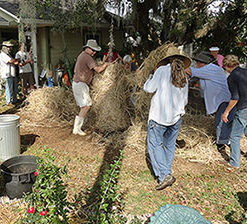
When it was time for the practical portion of the workshop, we changed a 20′x 25′ grassy patch into a new sheet compost, or layer cake garden in less than an hour. I do this sort of work regularly. Sometimes I have made large gardens by my lone or with the help of my husband, and sometimes with the help of a few friends or volunteers. It always takes some time. The huge amount of work the permaculture workshoppers got done in an hour was exciting. It wasn’t that we were very well organized, we weren’t, but the work was there in front of us, the materials were there ahead of time (thanks to some gathering of manure and hay donations done in the weeks ahead of the workshop), and we all knew what we had to accomplish, and our many hands made a big job seem small. It was a powerful example of the collective force in banding together to share a chore.

There was another outcome from having shared work together that just sharing a classroom may not have produced. After the work was done and we all sat down on the grass in the shade together we were different than before. It seemed to me that in expending our energy together and completing a chore we had become more familiar. I have sensed this each week when several of us garden volunteers complete a harvest, having picked, packed, weighed and delivered the harvest together makes us more cohesive. This is a connection to community, a benefit, that I think we lost when we mechanized our work.

After the classroom portion of the workshop lunch was served. Many of the people attending the workshop opted to buy the prepared lunch from S&S Takeout in Fort Pierce. It was a really good vege sandwich made with thin sliced breaded and fried eggplant with roasted red peppers, provolone cheese and a balsamic drizzle on a ciabatta roll. There was also a whole wheat pasta salad and cookies, and we drank Roselle tea.

We couldn’t have completed the practical application of the workshop with out manure and hay donations. We were given 6 bales of moldy T&A Hay from Rosa at Thomas Feed and Farm Supply on Okeechobee Rd. in Fort Pierce, and we received an old round bale and all the loose coastal hay we could rake out of the trailer from Ronnie at Tri-County Feed on US I in South Fort Pierce. Our manure donations came from Thea Bullard at Midnight Cattle Company, Wyn Burns at Creature Safe Place, and Miss Pam from Granny Pam’s Pony Rides. We are also grateful to Heathcote Botanical Gardens for jumping at the opportunity to host this workshop, helping to publisize it, and for their help with setting up the Pioneer House with tables and chairs for us.

Finally I want to mention again that we had many hands working ahead of and during the workshop to make sure we were well prepared. James collected cardboard and filled his truck twice with manure as well as joining me to collect manure a third time. Renee and Mike worked on the cardboard, removing staples and tape from a mountain of giant boxes. Susana went out on pasture with me to collect our last load of manure, and then Nan, Renee, and James covered all of our various needs throughout the workshop. When we broke for lunch Renee and Nan made sure the food was there. Nan put tables and chairs out on the patio so that we could all sit together. She made the Roselle tea and other refreshments, and took care of all issues kitchen, and even managed to shoot some pretty good pics.

Of course without Susana Lein and her permaculture training program none of this would have been possible. She has had a profound effect on me, and I remain grateful for having met her and for each of her classes that I have been able to attend. She has greatly increased my understanding of permaculture principles and practices, and she has done this with great patience, and without judgement.

Tags: , , , ,

Dec
25

Education: Full Day Permaculture Workshop @ Heathcote Botanical Gardens

Posted by Adina

There is a very good opportunity for continued learning for Permaculture enthusiasts. Permaculture Instructor Susana Lein of Salamander Farms in Berea Kentucky is coming to Heathcote Botanical Gardens to present a day long permaculture workshop. I will be assisting her. There will be a classroom presentation and then participants will be able to learn while doing in Heathcote’s No Till Organic Garden where we will set up a new garden location for a corn and bean field for spring planting.
This being a full day workshop there will be a lunch break and an lunch box option provided by S&S Takeout. Here is the press release with all the details you crave to know:

Permaculture in Practice Workshop at Heathcote!

Back by popular demand, permaculture teacher and farmer Susana Lein of Salamander Springs Farm, Berea, KY will return to teach a full day permaculture workshop Saturday, January 21, 9 am-5 pm. at Heathcote Botanical Gardens in Ft. Pierce.
St. Lucie County Master Gardener Adina Lehrman, Vegetable Garden Coordinator at Heathcote, will co-facilitate this workshop, which will include hands-on practicums at Heathcote’s organic vegetable gardens.

Learn to provide your own food and shelter using few outside resources. Susana Lein will teach practical applications of permaculture principles and methods using examples from building her productive organic farm, market business and homestead from scratch – starting with very few financial resources and no existing infrastructure. Learn how to build rich, healthy soil from infertile land without tilling, to recycle local nutrients, energy & resources, to intensively utilize space, to incorporate perennials, season extension, self-sufficient poultry, marketing and processing farm products. The workshop will also include an overview of rainwater catchment, ponds, a gravity-fed spring water system, utilizing solar energy, and natural building with local and salvaged materials.
Adina will offer South Florida specific advice for perennial food crops, local resources for soil building, keeping laying hens clean and healthy in extreme summers, and steps for moving an overly consumptive household toward sustainability.

Registrants will receive educational materials to review before the workshop to facilitate the learning process and question & answer sessions. Participants can use this course as a springboard to create a permaculture network on the Treasure Coast to continue learning by doing and sharing.

A permaculture teacher for many years, Susana Lein began homesteading in the Kentucky Appalachians in 2001 after living 8 years among the Pokomchi people of Guatemala and working in several Latin American countries. Salamander Springs Farm, near Berea, KY, produces a wide range of fresh market crops, grains & dry beans, as well as value-added products (see: www.LocalHarvest.org/farms/M5606; online store:). Starting at the New Alchemy Institute in the mid-1980′s, Lein has studied and taught permaculture in many countries and received her design certificate from Max Lindegger, creator of the Crystal Waters Permaculture Ecovillage in Queensland Australia. See educational slides of Salamander Springs Farm (2001-2011): http://www.flickr.com/photos/28998021@N02/sets/.
Adina Lehrman, St. Lucie County Master Gardener, natural no-till gardener, founding member of The Compost Gardener, an organic garden consulting business; author of the ManureDepot.com blog; Volunteer Coordinator for Heathcote’s no-till organic gardens, creator & presenter of Heathcote’s 9 class series: A Year In The Organic Garden.

Registration is $45 for Heathcote members and $50 for non-members. Class size is limited and pre-registration is required. An optional vegetarian lunch, delivered to Heathcote by S&S Takeout, a local and sustainable Fort Pierce restaurant, for $9, must be reserved with pre-registration. To register call 772-464-4672, email chall@heathcotebotanicalgardens.org, or visit Heathcote Botanical Gardens 210 Savannah Road Fort Pierce, Florida 34950.

Tags: , , , , ,

Dec
22

Garden Amendments: About Alfalfa & Peanut Hay Fall 2011

Posted by Adina

In my In The Garden articles about the Lasagna Layer Mounds the garden amendments straw, manure, and alfalfa hay are frequently mentioned. They are the ingredients for the garden mounds, but they are something else as well. Of course we know manure is a waste product from livestock farming or ranching, and we know straw, the part left over from grain production, was once a common livestock bedding and building material. When I began asking around at feed stores for straw for my gardens it was no where to be found. I had to wait weeks for special orders. Now both my local feed stores carry straw because local gardeners have created a demand for it.
Alfalfa is different. Alfalfa is still one of the most common high nitrogen/protein feed hays for livestock. It has not been hard to find at the feed stores because it is still in demand by ranchers.

Because of this summer’s drought in the southern plains states there is a higher demand for alfalfa hay. Ranchers in Texas and Oklahoma not only don’t have the locally grown hay on which they usually rely, their pastures don’t have live grass. Life begins and ends with water, and the weather conditions in another region affect us all. Right now we are seeing that in alfalfa prices. One of our feed stores is not going to be able to get alfalfa, and the other has it for $21.75 a small bale, and there are worries that the price of alfalfa hay will continue to rise.

When I talk to people about starting a garden suddenly with a lasagna layer mound they often ask me how long the mound will last, and if they can assemble the same mound year after year. I don’t like the idea of building these mounds every season. It is ideal once we start growing to consider the next growing season as we are tending to the current one. It is easy to prepare for the next garden by setting up garden mounds of brown leaves and manure, grass clippings and kitchen wastes, or fence corner composts, or planting green manure crops well ahead of the growing season so that we don’t have to rely on precious livestock feed for our gardens. I feel like this feed hay shortage due to a serious drought is a perfect example of one of the many reasons why we should have less reliance on expensive out of area resources, and learn how to make or find locally, the organic materials we need for our garden soils. This frees up feed hay for livestock and takes some of the pressure off of the system.

I recommend that we Floridians buy peanut hay rather than alfalfa for assembling the No Dig Lasagna Layer Mound. Last I checked it was under $15 for a 2 string bale, and it is plenty nitrogen rich for the purpose of growing.

For the purpose of pursuing sustainable practices I am preparing to grow some green mulch crops. Lots of great grass crops grow well here in the winter including wheat, oats, and rye. Once grown and cut down the grassy leaves cover the soil, and the creatures and organisms of the soil have lots of organic matter to chew. Most grasses after being cut once re-grow afterward to make another crop, and if left uncut they will go to flower and set seeds. Several different kinds of cow peas including black eye peas and iron clay peas grow very well here in the summer and can provide cover and leaf mulch for our soil in addition to the nitrogen legumes fix and store in little fertile balls attached to their roots.

This year we build Lasagna Layer Mounds, but we can prepare for next year by collecting leaves and manure or grass clippings, or growing green crops to cover and feed the garden soil.

Garden on!

Tags: , , , , , , ,

Oct
11

In The Garden: October 2011, Plant Now!

Posted by Adina

Fall is the beginning of our cold crop planting season in South and Central Florida. Tomatoes, Peppers, Eggplant, Basil and Beans that were started in August may be getting ready to fruit, and may ripen fruit before our first frost. If you are starting those plants now you will have to protect them from the coldest part of our season in order to harvest fruit from them in the early spring (February, March). I have never eaten a tomato from a vine I planted in October before January. As the days grow shorter, no matter how lovely the weather, growth slows down in the garden.

Now is the time to plant lettuce, arugula, cole crops like cabbage, kohlrabi, broccoli, mustard greens, chard, and asian greens like pak choi, and tatsoi, peas, carrots, onions, radishes, nasturtiums, all herbs, cucumbers, and squash. I have also recently started bush beans. It is later then I should have started them, but I am hoping to have beans before the first frost.

In the last few years we have had some rather severe cold weather in December, and January with temperatures dipping below freezing. For that reason I put very little effort into frost tender plants until February or March. I focus my planting on the crops that love the cold and even become sweeter or more tender in a frost or freeze. Brassicas or cole crops really like the cold and become more tender after a frost, and don’t seem to mind a few hours of freezing temperatures. Radishes growing in cool weather are mild sweet and juicy. The same crop grown in hot temperatures becomes hot, bitter, and dry. Very cold weather makes the most crisp, sweet, attractive, nearly translucent carrots. This is because carrots will transfer sugars from the leaves to the roots as a survival response to cold. Chard manages cold quite well, though like mustard and lettuce the leaves can be ruined by a freeze, but the plants usually resurge easily afterward, so they are cold season crops in my garden. Nasturtiums don’t make it through a freeze in my garden, but I don’t bother to protect them because they are so vigorous that once established a freeze is just a needed pruning.

Because I can’t be entirely certain that we will have lots of cold weather I try to hedge my bets with a few crops that will enjoy a warmer winter. I therefore keep bush and pole beans in my winter plan, and then if I have to replace them with more in a few weeks I do that. I also keep tomatoes going throughout the winter so that I have an early tomato as well as the spring tomatoes that always come as volunteers.

This week we have been having some tremendous rains and wind. My seedlings are unfazed by the ferocity of the rain. They were planted into soil that was disturbed only enough to bury the seeds. In spite of the torrential downpours we have been experiencing for the last 4 days my soil has not run off. This is just another advantage of the no till method of growing.

Some people here don’t know it is time to plant. Many have only recently arrived from the North where winter is the fallow time for their gardens. If you have been caught unaware and are still hoping to plant some crops for this winter and spring season it is not too late. What we call our native soil here (the fill that was brought in when your house was built, and the soil that has been ravaged for years with synthetic fertilizers and pesticide of all sorts) is severely depleted and is rather sandy. Were you to plant into it as is, you would not be satisfied with your crops. To start an optimum soil garden right away see my article Revisiting the Lasagna Garden Mound. That article has a printable diagram (white background) that will instruct you in how, and with what to stack the lasagna garden mound. With that mound built you can plant into it right away, and you will have a healthy and bountiful garden for your first season gardening here in Florida without digging a single shovel full of soil, and without spreading a single trowel of fertilizer.

Now get out there and plant your best garden ever!

Tags: , , , ,


Warning: array_filter() [function.array-filter]: The first argument should be an array in /home/content/a/w/l/awlehrman/html/wordpress/wp-content/plugins/wordpress-tweaks/tweaks.php on line 672